
About CardioXcel
Crafting excellence with our pioneering quality in surgical handheld instruments.
Why Choose Us
We bring you the exact specification that you need.

Unbeatable Pricing

High quality
We choose high grade SS for its durability, corrosion resistance, and ease of maintenance. Some instruments feature Tungsten Carbide Inserts for enhanced sharpness.

Functional Assessment
We ensure a robust testing process of instruments for proper function. We must ensure that instruments have consistent patterns. Deviations can affect functionality and precision surgeries.

Innovation Mindset
Innovation in surgical instruments impact patient outcomes. We collaborate with surgeons / healthcare professionals for their insights into real world challenges during surgeries to drive innovation.

Ergonomics
We look for manufacturers that focus on miniaturization to develop compact instruments, integrating automation that allow precise movements within confined spaces without tremors.

Quick Delivery
We collaborate with manufacturers across the world and focus heavily on processes to affect quick, rapid flawless deliveries. Foreign trade experts handle our delivery operations.
Schedule a Consultation
Ph: (0124)-234-5678
Address: Block, City , Street ,Country, TT Pincode
Non-Locking Forceps
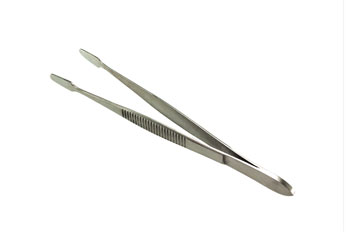
Forceps are also known as non-locking forceps, grasping forceps, thumb forceps, or simply pick-ups. It is used for grasping tissue or other lighter objects during surgery. Forceps can be toothed or non-toothed at the tip. As per its usage, forceps are categorized as Tissue Forceps, Adson Forceps, Bonney Forceps, DeBakey Forceps, Russian Forceps etc.
Locking Forceps.
Locking Forceps, commonly called Clamps are ratcheted instruments used to hold tissue or objects or provide hemostasis. It can be traumatic or atraumatic. There are various kinds of clamps – Crile Hemostat, aka ‘snap’ are used to grasp tissue or vessels that will be tied off; Kelly Clamp is a larger size variation of hemostat with similar function; Kocher Clamp is a traumatic toothed clamp used to hold tissue that will be removed; Allis and Babcock Clamps is a slightly rounded jaws used for grasping intestines; etc.
Locking Forceps.
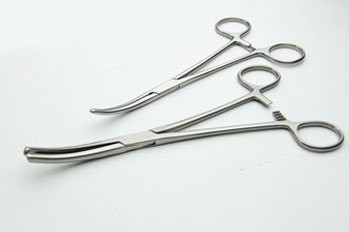
Locking Forceps, commonly called Clamps are ratcheted instruments used to hold tissue or objects or provide hemostasis. It can be traumatic or atraumatic. There are various kinds of clamps – Crile Hemostat, aka ‘snap’ are used to grasp tissue or vessels that will be tied off; Kelly Clamp is a larger size variation of hemostat with similar function; Kocher Clamp is a traumatic toothed clamp used to hold tissue that will be removed; Allis and Babcock Clamps is a slightly rounded jaws used for grasping intestines; etc.
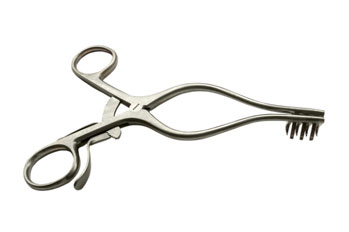
Retractors
Retractors are used to hold an incision open, hold back tissues or other objects like the abdominal wall to maintain a clear surgical view or reach other organs. It is also used to gain exposure of skin layers. They can either be hand-held or self-retaining via a ratcheting mechanism. Some variants of retractors are Deaver Retractor, Army-Navy Retractor, Weitlaner Retractor, Richardson Retractor and Bookwalter Retractor.
Scissors
Scissors are used for cutting tissue, suture, or for dissection. Scissors can be straight or curved and may be used for cutting heavy or finer structures. Some of the variants of scissors are: straight and curved Mayo Scissors, Metzenbaum Scissors, Pott’s Scissors, and Iris Scissors.
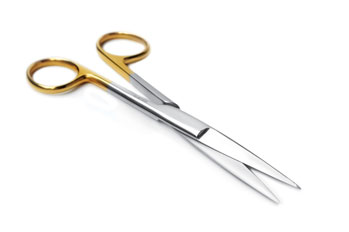
Scissors
Scissors are used for cutting tissue, suture, or for dissection. Scissors can be straight or curved and may be used for cutting heavy or finer structures. Some of the variants of scissors are: straight and curved Mayo Scissors, Metzenbaum Scissors, Pott’s Scissors, and Iris Scissors.
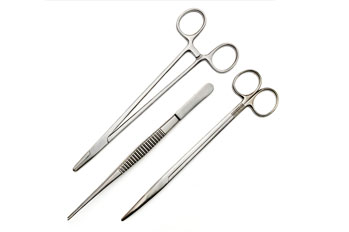
Needle Holders
A needle holder, also known as a needle driver or needle forceps, is a surgical instrument similar to a hemostat. Surgeons and doctors use it to hold and manipulate a suturing needle during various surgical procedures, including wound closure, ligation, and other situations that require re-anastomosis.
Suction Tubes
The primary purpose of a suction tube is to aspirate fluids, blood, or other debris from the surgical area. It is also used to clear surgical smoke. Many have a curved profile to reach deeper cavities. They are made of stainless steel for durability & sterilization and come in various sizes. These instruments connect to suction devices via flexible hoses.
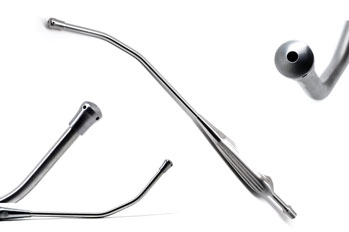
Suction Tubes
The primary purpose of a suction tube is to aspirate fluids, blood, or other debris from the surgical area. It is also used to clear surgical smoke. Many have a curved profile to reach deeper cavities. They are made of stainless steel for durability & sterilization and come in various sizes. These instruments connect to suction devices via flexible hoses.
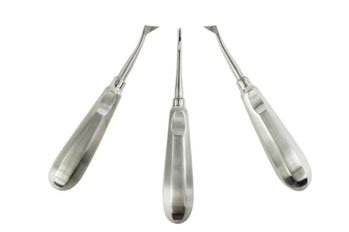
Surgical Elevators
A surgical elevator serves to scrape, elevate, or dissect bones or tissues during surgery. It consists of three main parts – handle, shank, and blade. The blunt tip is used for elevating bone or separating muscle from bone. The types of elevators are Single-Ended Elevators, Double-Ended Elevators, Sharp or Semi-Sharp Elevators, and Freer Periosteal Elevators.
Make an Appointment
We are here for you.
Trusted By
Call Us
Email Us
Make an Appointment
We are here for you.